Dream Believe Exceed
At Just Like You & Me, we love sharing the stories of people who beat the odds and rise above. Sometimes all it takes is a little inspiration or a nudge in the right direction to see what’s possible. Thanks for visiting our site. We hope the stories below inspire you to dream, believe, and exceed.
Not Finished Yet – Mayson White
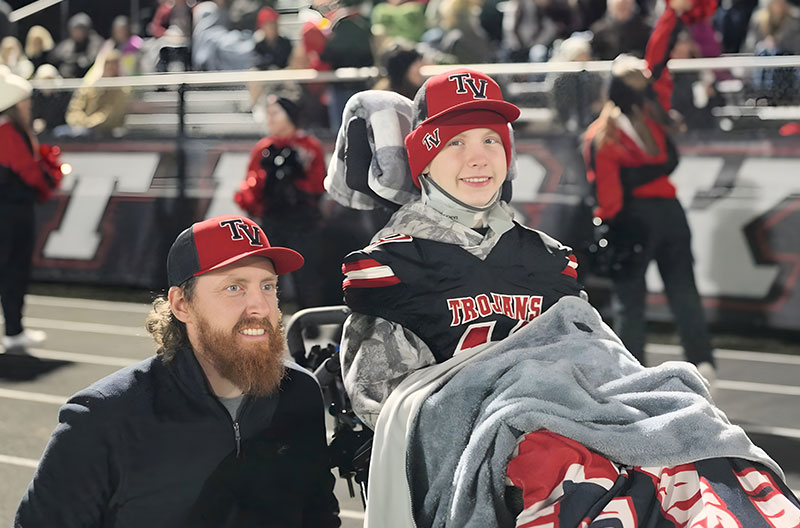
On August 22, 2025, under the lights for Tusky Valley High School, Mayson White stepped onto the field for the first football game of his high school career.
He was a freshman.
It was supposed to be the beginning.
A game. A tackle. The start of something he had worked toward, something he had imagined.
And then, in a single moment, everything changed.
He went in for a tackle.
It was routine. The kind of play that happens over and over again in a game built on repetition and instinct.
But this one didn’t end the same.
The impact broke vertebrae in his spine.
Just like that, Mayson was paralyzed.
There are moments in life that divide everything into before and after.
For Mayson, this was one of them.
Before, there was football, school, teammates, a future that felt open and predictable.
After, there were hospital rooms, uncertainty, and a reality that no one prepares you for, especially not at fourteen.
But what followed was not what most people expect from a story like this.
There was no surrender.
No acceptance of limits.
Instead, there was a decision.
Mayson decided he would walk again.
Recovery became something more than physical.
It became a daily commitment.
To push.
To endure.
To believe in something that, for many, would feel impossible.
Every day meant work. Therapy. Pain. Small progress that most people would never notice.
But for him, every inch mattered.
Every movement was proof that the story wasn’t over.
On October 23, 2025, just two months after the injury, Mayson left the hospital for something that might seem ordinary to everyone else.
He went to a football game.
An away game.
It was his brother’s senior night.
The last time his brother would take the field as a high school player.
Mayson wasn’t returning to his own home field. He wasn’t stepping back into something familiar or comfortable.
He was entering a new space, surrounded by a crowd, many of whom were seeing him for the first time since the injury.
That night, the field still felt the same.
But everything else had changed.
Because Mayson was there.
For many in the stands, it was the first time they had seen him since August.
For him, it was the first time being back in that environment: the lights, the noise, the energy of a game that once felt like home.
What unfolded wasn’t about the score.
It was about presence.
It was about a community showing up.
People who knew him. People who didn’t. Teammates, classmates, families. All there for something bigger than football.
They came to support him.
To remind him that he wasn’t alone.
There are moments when strength is measured not by what someone does, but by where they choose to show up.
That night was one of those moments.
He could have stayed away.
He could have avoided the reminders.
Instead, he came.
Mayson’s story is still being written.
There are challenges ahead. Long days of recovery. Setbacks that will test him in ways most people will never fully understand.
But there is also something else.
Belief.
In himself.
In the work.
In the possibility that what feels impossible today won’t always feel that way.
His goal is simple.
To walk again.
And every day, in ways both visible and unseen, he is moving toward it.
Sometimes a story doesn’t end where you think it will.
Sometimes what looks like an ending is just the beginning of something harder, deeper, and more meaningful.
Mayson White’s story is not about what happened to him.
It’s about what he chooses to do next.
Not Right Now – Alexander Vasileski
Alexander Vasileski, at 16, believed what most young athletes believe, that his body was unbreakable.
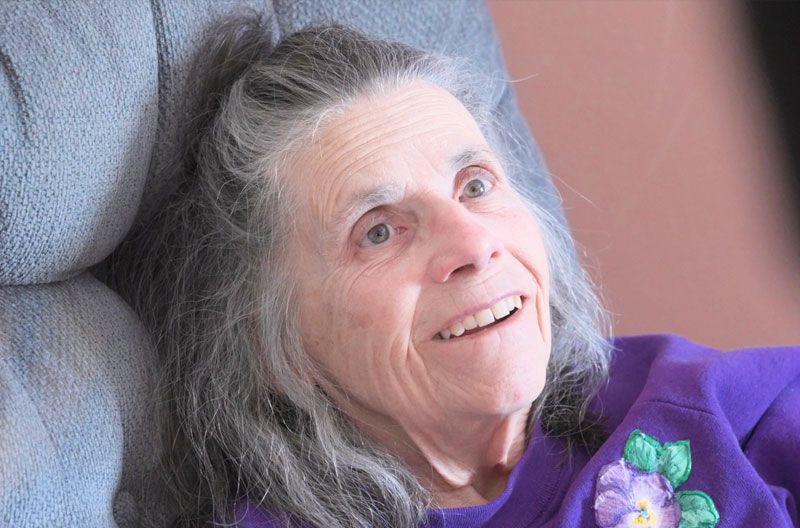
He was strong, active, constantly moving. So when the fatigue set in, when the soreness lingered longer than it should have, he dismissed it. It was just part of the game, part of growing up.
Until a doctor said a word that altered the course of his life.
Cancer.
He did not fully grasp what it meant. Few do at that age. The word itself was enough. Everything else became distant, muffled, irrelevant.
He made a decision that would define the next chapter of his life. He told no one. Not his friends, not even those closest to him. He continued to play, to study, to live as if nothing had changed.
For a time, it worked.
Years later, life appeared to be aligning in his favor. He sat in a room with a contract in front of him. Five million dollars. A chance to play in the National Football League. A dream realized.
Three days later, that same room delivered a different reality.
The doctors entered. Their tone was clinical, detached.
Stage four cancer.
In his bones.
He was told he might have ten months to live.
There was no space left for denial.
Treatment followed, and it was relentless. Chemotherapy and radiation stripped away not only his strength but his sense of identity. His body changed rapidly. The person staring back at him in the mirror felt unfamiliar.
But the physical toll was only part of it.
What stayed with him most was the isolation.
He was surrounded by professionals, by systems designed to treat him, yet he felt profoundly alone. Conversations became transactional. Hope felt conditional.
At one point, after being told how little time he had left, something shifted. Whether it was exhaustion, clarity, or something deeper, he chose to walk away from treatment.
It was not a calculated decision. It was instinct.
That decision would later prove critical.
An experimental opportunity emerged, one that would not have been available had he continued conventional treatment. It involved a stem cell procedure still in its early stages, with uncertain outcomes.
He agreed.
The procedure lasted 12 hours. At multiple points, his heart stopped. By the third time, medical staff prepared to record his time of death.
It did not come.
His heart resumed on its own.
He survived.
Recovery was not triumphant. It was disorienting. Survival did not immediately bring relief or clarity. Instead, it left him searching for meaning in what he had endured.
That meaning began to take shape in an unexpected place.
While spending time with children undergoing cancer treatment, he witnessed a conversation between two young girls. One asked why they had cancer. The other, no older than six, responded without hesitation.
“God gave me cancer because He knew I was strong enough to handle it.”
The simplicity of the statement carried a weight that years of education and experience had not.
It reframed everything.
What he had viewed as misfortune began to take on a different form. Not as punishment, but as preparation. Not as an ending, but as a redirection.
Today, he works with patients facing their own diagnoses, their own uncertainty. He approaches them not only with clinical knowledge but with lived experience. He understands the fear, the isolation, the quiet moments that are rarely spoken about.
He does not promise outcomes. He offers presence.
For him, survival was not the conclusion of the story. It was the beginning of a different responsibility.
If not him, then who.
The Ones We Don’t See
There are places where time slows down. Hallways where footsteps echo a little longer. Rooms filled with quiet routines. Windows that look out onto a world that keeps moving, even when the people inside no longer can.
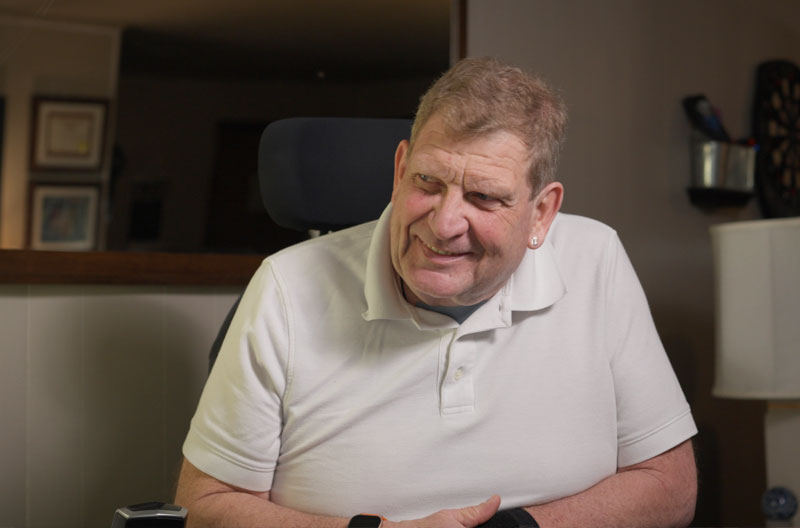
There are places where time slows down.
Hallways where footsteps echo a little longer. Rooms filled with quiet routines. Windows that look out onto a world that keeps moving, even when the people inside no longer can.
For many residents of nursing homes, life becomes smaller in ways that are difficult to explain.
They leave behind their homes. Their neighborhoods. The rhythms that once defined their days. What remains is often structured, necessary, and safe, but not always personal.
And sometimes, not always seen.
That absence is what sparked an idea.
It began with a simple recognition: people need to be seen, and people need to be loved.
Not occasionally. Not when it is convenient.
But consistently.
The Blessing Bloom Project grew from that belief, bringing together individuals from across a community who shared a common instinct, that small acts of care can reach places that systems cannot.
The concept itself is uncomplicated.
People gather. They create balloon bouquets. They hand-color cards. They take real, intentional time to make something for someone they have never met.
Then they deliver those gifts to nursing home residents.
No expectation. No recognition.
Just presence.
What happens next is not dramatic.
There are no grand gestures, no sweeping transformations.
There are smiles.
Moments of surprise.
A pause in the routine.
A reminder, however brief, that someone thought of them.
That someone cared enough to show up.
The project has grown steadily, drawing in people from different backgrounds, different churches, different businesses. People who might not otherwise cross paths find themselves working side by side, united by a purpose that requires no explanation.
They are not solving a system.
They are filling a gap.
One interaction at a time.
There is something quiet but powerful in that kind of work.
To care for someone you do not know.
To give without expectation of return.
To recognize that dignity is not only found in independence, but also in being acknowledged, even in the smallest ways.
Over time, the impact extends beyond the residents themselves.
It reshapes the people who participate.
It reminds them that connection
does not require familiarity. That community is not defined only by proximity, but by intention. That kindness, when practiced deliberately, becomes something larger than the act itself.
The Blessing Bloom Project has doubled in size over the past year, a reflection of something deeper than growth.
It reflects a need.
A recognition that in a world that often moves quickly, it is easy to overlook the people who move more slowly.
Easy to forget those who are no longer in the spaces we frequent.
But they are still there.
Still waiting.
Still deserving of being seen.
And sometimes, all it takes is a balloon, a handwritten card, and a moment of someone’s time to remind them of that.
Still Standing – Stephen Patuc
Stephen Patuc does not measure his life by what has been taken from him. He measures it by what remains.
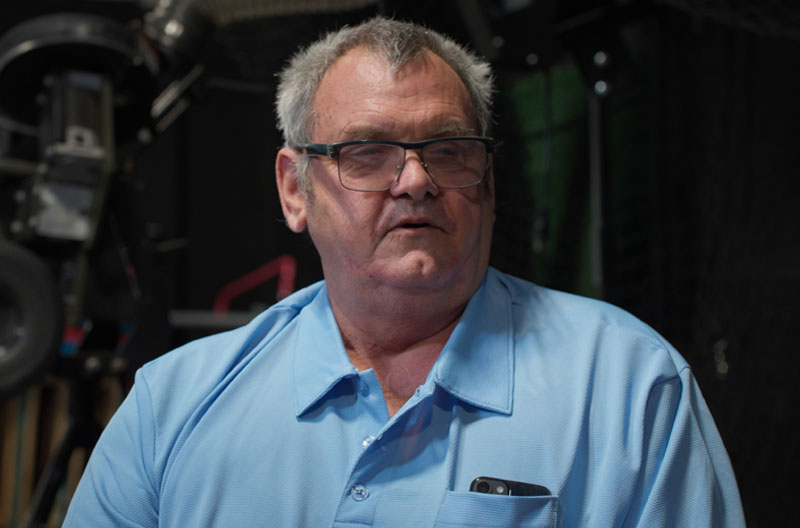
Stephen Patuc does not measure his life by what has been taken from him.
He measures it by what remains.
There was a time when his life followed a different trajectory. Born in Yorkshire, England, to a U.S. Marine father, Steve grew up moving from place to place, shaped by discipline, travel, and exposure to cultures most people never encounter. Japan left a lasting impression. So did the structure of military life, the expectation that you show up, that you endure, that you adapt.
Eventually, he followed that path himself.
The Marine Corps was not just a career. It was a continuation of something familiar, something rooted in identity. After serving, he returned home and built a life in construction, drawn to the physical work, the satisfaction of building something tangible.
It was a life that made sense.
Until it didn’t.
The accident happened on an ordinary day.
He was driving when a woman, disoriented by Alzheimer’s, crossed into his lane and struck him head-on. The impact forced the engine into the cabin, crushing the space around him and snapping his body backward.
When he woke up, the diagnosis was clear.
Paralyzed from the waist down.
In an instant, everything changed.
His body no longer responded the way it once had. The independence he had built his life around was gone. Basic functions, things most people never think about, became daily obstacles.
The physical pain was only part of it.
The deeper loss was dignity.
“I was devastated,” he would later say, recalling what it meant to lose control over his own body.
And then came the rest.
His marriage fell apart. Financial stability disappeared. The life he had known unraveled piece by piece, leaving him not just physically broken, but emotionally unmoored.
What followed was a period he did not try to soften.
He became angry.
Bitter.
Difficult to be around.
Friends visited. Nurses cared for him. But his world had narrowed to a hospital bed, and the person he had become pushed people away.
At one point, a friend named Billy walked into his hospital room, sat down, and placed a g*n on the bed.
Not as a threat.
As a mirror.
He told Steven that if he was going to continue living with that level of anger, it would be easier for everyone if he simply ended it. Not out of cruelty, but out of frustration, out of love expressed in the only way that seemed capable of breaking through.
The moment landed.
It forced a decision.
Not about life or death, but about how he would live what remained of it.
Recovery, if it can be called that, did not come all at once.
It came in fragments.
A doctor who sat at the edge of his bed and told him plainly that he was not living, only existing.
A gradual reduction in the medications that had dulled his awareness.
A willingness, however small at first, to reengage with the world.
Then something unexpected happened.
A medical device, originally intended to help manage pain and bodily function, was implanted as a last resort. When activated, it did more than anyone anticipated.
He felt movement.
For the first time in years, he could move his foot.
It was not a cure. It did not restore him fully. But it changed the trajectory.
It gave him something back.
And sometimes, something is enough.
But stability never lasted long.
What followed was a cascade of complications.
Blood clots. Strokes. Heart attacks. Cancer.
A tumor in his throat that collapsed his airway. Another that spread to his lungs. A brain tumor that continued to grow. Sixteen strokes over time. Two heart attacks. Multiple surgeries.
Each diagnosis came with its own set of decisions.
Each decision forced him to confront a system he no longer fully trusted.
At one point, he was taking more than 30 medications a day. Psychiatric drugs layered on top of painkillers, layered on top of treatments meant to stabilize a body that seemed to resist stabilization.
It reached a breaking point.
He stopped.
Not gradually.
Completely.
He chose to step away from treatment, from the protocols, from the expectation that survival should come at any cost. “I’m going to die,” he said. “But I’m going to die my way.”
It was not a resignation.
It was control.
What defines Steven now is not the list of conditions or the number of times he has come close to death.
It is how he moves through the world.
He does not deny pain. He does not pretend the circumstances are easy. But he refuses to let those circumstances define him.
“This doesn’t define who I am,” he says of his condition.
Instead, he defines himself through something far simpler.
Kindness.
He talks to people. All people. In hospitals, in waiting rooms, in everyday encounters. He remembers names. He checks in. He builds connections in places where most interactions are transactional.
Over time, those connections have grown into something larger.
A network of thousands of people who text him, call him, check on him when he goes quiet. People who have come to rely on his presence as much as he relies on theirs.
It did not happen by accident.
It was built.
One conversation at a time.
He is not unaware of how unusual his outlook can seem.
He has been asked whether he is afraid of dying.
He is not.
Not because he believes he is invincible, but because he has accepted what is inevitable.
What matters to him is not how long he lives, but how he lives while he is here.
That means showing up.
Going out.
Talking to people.
Refusing to disappear, even on the days when his body gives him every reason to.
It also means telling others something many struggle to hear.
Do not let your circumstances define you.
Not the diagnosis. Not the injury. Not the setback.
None of it.
If there is a philosophy that guides him, it is not complicated.
Be kind.
Not selectively. Not conditionally. Not only when it is easy.
Always.
“Love one another,” he says.
It is the kind of advice that can sound simple until you try to live it.
For Steve, it is not abstract.
It is daily practice.
And in a life shaped by loss, pain, and uncertainty, it is the one thing he has chosen to hold onto.
Not because it fixes everything.
But because it changes something.
Sometimes, that is enough.
A Place to Play – Timothy Dowling
When Timothy Dowling and his wife brought their daughter Kelly home, she was 11 days old.
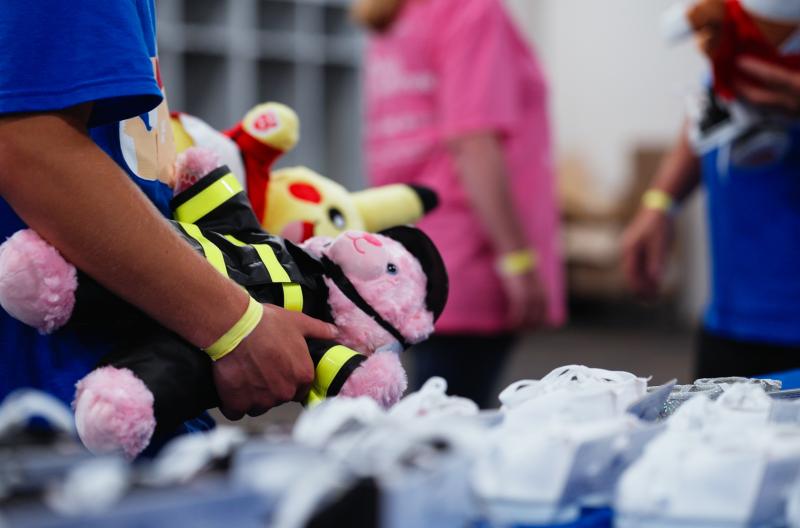
They had chosen her. Adopted her. Welcomed her into their family with the same hopes any parent carries. A future full of possibility, of growth, of ordinary moments that become meaningful over time.
It was only later, as she grew, that they began to notice she was developing differently.
At first, it was subtle. Small delays. Missed milestones. Then came the appointments. Doctors. Specialists. Conversations that slowly shaped a new understanding of who Kelly was and what her life might look like.
She had special needs.
For Tim, it was unfamiliar territory. He had seen it from a distance before, but never like this. Never as a father. Never as someone responsible for guiding a child through a world that does not always make space for difference.
Still, Kelly was like any other kid in one important way.
She wanted to play.
More specifically, she wanted to play softball.
Tim had spent years around the game. As an umpire, he knew the rhythms of it, the expectations, the structure. He also knew that Kelly would not fit into those systems the way other children did.
But that did not change her desire.
She wanted to be on the field.
At the time, there were no clear options. No obvious path forward. Just a child who wanted to participate in something that seemed just out of reach.
That changed when they came across a program at a local event.
It was called the Canton Challengers.
They were told to come watch a game.
They did.
And almost immediately, something shifted.
Kelly was welcomed without hesitation. Pulled into the dugout. Given a place on the bench. Treated not as an exception, but as part of the team.
Tim remembers what happened next in simple terms.
He went out and bought her a glove.
Then a bat.
She had found her place.
The Canton Challengers was built on a straightforward idea. There were children who wanted to play but were often left behind in traditional leagues. Not because they lacked interest or joy, but because they did not fit the structure of competition as it was typically defined.
One parent decided that needed to change.
What began as a small effort became part of a larger network connected through Little League, giving children with physical and cognitive challenges the opportunity to participate in baseball across the country.
In Canton, it became something more.
A community.
A place where children, and even adults, could show up, be themselves, and take part in something that belonged to them.
The games themselves are different.
There are no scores kept. No outs recorded. Everyone bats. Everyone plays the field. The structure is adjusted, but the purpose remains the same.
Participation.
Joy.
Belonging.
For Tim, the impact extended beyond the field.
Through Kelly, he began to see things differently.
He had once assumed there were limits to what she would be able to do on her own. Over time, she proved him wrong.
She learned to cook. To help around the house. To take on responsibilities that once seemed unlikely.
She grew.
And in watching her grow, he did too.
He learned patience. Perspective. The importance of not underestimating someone simply because their path looks different.
Most of all, he learned that what people often need is not to be treated differently, but to be treated fully as who they are.
That belief shaped how he approached others.
It shaped how he coached.
It shaped how he saw the world.
At one point, after organizing a fundraising tournament to support the league, a coach approached him with a realization.
He had spent years focused on winning.
After watching the Challengers play, something changed.
“It’s not about winning or losing anymore,” the coach said. “This is what softball should be about.”
Tim had been saying that for years.
Now someone else understood it.
The tournament itself grew from a simple need.
At one point, the league lacked the funds to send its players to a state tournament. Tim organized a small event to raise money. A handful of teams showed up. A few thousand dollars was raised.
He planned to do it once.
But people kept asking when it would happen again.
So he kept doing it.
Years later, it has become something larger than he expected. Dozens of teams. Volunteers donating their time. Players from other leagues stepped in to support the Challengers during special games.
What began as fundraising became something else entirely.
A bridge.
Between communities. Between perspectives. Between people who might not otherwise cross paths.
There are moments that stay with him.
A player looking around at a packed field and saying it felt like the World Series.
A young athlete he met years earlier who, after a serious accident and long recovery, found her way back to the game.
Parents connecting with other parents, sharing advice, learning from one another.
Small interactions that build into something larger over time.
Tim himself is no stranger to hardship.
In 2005, he collapsed at work. What initially seemed like a medical incident became something more serious.
Cancer.
Hodgkin’s lymphoma.
He remembers the moment it became real. Not when he heard the diagnosis, but when he heard his wife crying behind him.
That was when it settled in.
Treatment followed. Chemotherapy. Radiation. Long days and longer recoveries.
He continued working through much of it, determined to maintain some sense of normalcy.
What carried him through was not a single moment of strength, but something steadier.
His family.
His wife. His daughter.
The life he still wanted to be present for.
Years later, he was declared in remission.
Since then, he has approached each day differently.
As something given, not guaranteed.
When asked what advice he would give to parents facing a similar situation, his answer is direct.
Do not be ashamed.
Love your child as you would any other.
Get them the support they need.
Let them find their way.
When asked how someone can change the world, he offers something equally simple.
Put yourself in someone else’s shoes.
It is not a complicated idea.
But, as his life has shown, it is one that has the power to change everything.
Nominate Someone You Know
We’re always looking for inspirational stories.
If you know someone with a story to tell, share it with us here and we'll share it with the world. Click below, fill out the form, and we'll be in touch. We can't wait to hear from you.

Why Just Like You & Me
Every day, powerful stories of resilience, strength, and courage go unheard. Not because they don’t matter, but because no one’s there to listen. At Just Like You & Me, we share personal stories to honor those who overcome, inspire understanding, and give hope to anyone who needs it.
Who We Are
Just Like You & Me is a nonprofit organization established to celebrate the power of the human experience by sharing stories of resilience, courage, and transformation. We share real stories of those who have overcome obstacles and those who inspire through their achievements, reminding us that no matter our circumstances – disability, success, or everyday life – we’re all united by love, connection, and community. We believe every journey holds the power to inspire another, showing us that we’re capable, connected, and never alone. Through our work, we aim to foster inclusion, break down barriers, and reveal a simple truth: at our core we are all just like you and me.
We are 100% crowdfunded and donor supported. We appreciate any support you can provide!

Meet Our Team
The dream of a few can change the world.
Life happens. And for our team, a few significant events and circumstances changed the course of their lives. One disease. One diagnosis. One unexpected meeting. What many may see as chance encounters, the Just Like You & Me leadership team saw as destiny: a way to change the world for good.
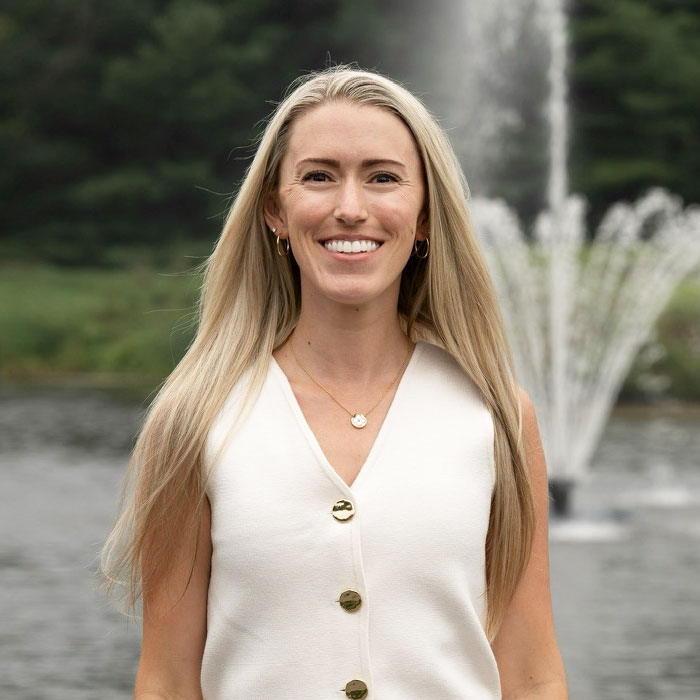
Aleena Orban
Aleena Orban is a healthcare professional turned nonprofit leader dedicated to serving
others through compassion, connection, love, and community during life’s hardest moments.
She spent nearly eight years working as a Physician Assistant in a Level II Trauma ...
Aleena Orban
Aleena Orban is a healthcare professional turned nonprofit leader dedicated to serving others through compassion, connection, love, and community during life’s hardest moments. She spent nearly eight years working as a Physician Assistant in a Level II Trauma Center Emergency Department, caring for patients during some of the most difficult moments of their lives. Grounded in a deep commitment to human connection, she served as a calm and compassionate presence for patients and families navigating high-stress, life-altering situations.
After starting a family and facing her father’s diagnosis of glioblastoma, an aggressive, terminal stage IV brain cancer, Aleena’s path evolved in deeply personal ways. Inspired by her husband’s passion for business, she took a leap of faith to join him in building and leading multiple organizations while continuing to walk hand in hand with her father on his courageous journey.
Not everyone is given the gift of walking beside someone they love through the final chapter of life. Aleena considers it one of the greatest honors of her life to have done so, remaining fully present for every breath, every need, and every moment in between. Having both brought life into this world and stood courageously beside someone as they left it continues to shape her why.
Through emergency medicine, business leadership, and personal loss, Aleena developed the ability to meet others in their own journeys with deep empathy and understanding. She strives to be a steady pillar in the most vulnerable moments, creating space for raw emotion, honest storytelling, and healing connection that inspires others to feel less alone. This ultimately led to the creation of Just Like You & Me, a platform dedicated to amplifying real stories that foster connection, inclusion, and light through all seasons of life.
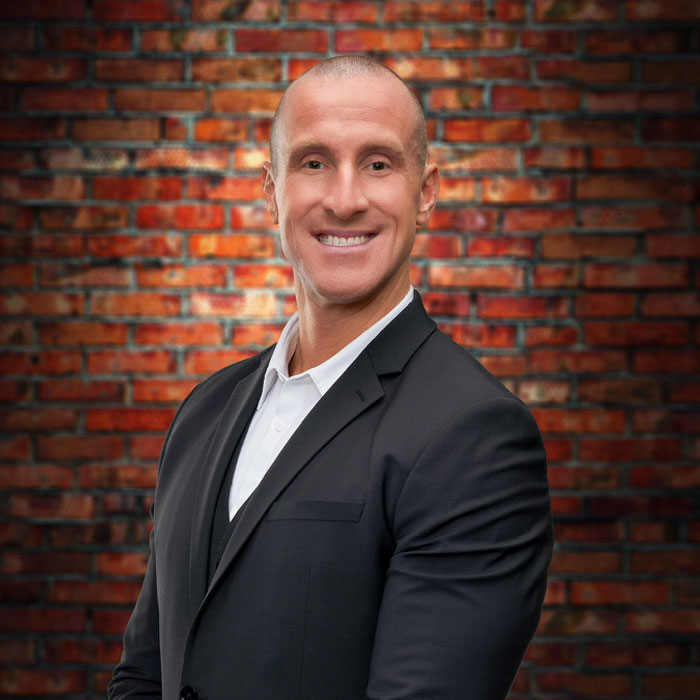
Connor Orban
Connor Orban is an entrepreneur and leader, but at his core, he is a servant who believes life is meant to be lived for something greater than any one person.
His journey has been shaped by faith, perseverance, and a deep commitment to loving people well, especially ...
Connor Orban
Connor Orban is an entrepreneur and leader, but at his core, he is a servant who believes life is meant to be lived for something greater than any one person. His journey has been shaped by faith, perseverance, and a deep commitment to loving people well, especially when life feels heavy and hope feels distant.
Long before leadership or success, Connor’s perspective was formed through hardship and love. Growing up alongside his brother, who lived with cerebral palsy and passed away in 2011, taught him that strength often looks different than the world expects. He learned that joy can coexist with pain, and that every life carries immeasurable value.
That foundation was deepened by mentors and family who modeled courage in suffering. Watching his father-in-law walk through terminal brain cancer with clarity, faith, and grace reinforced a guiding truth: that real strength is revealed not when life is easy, but when hope is chosen in uncertainty. His parents’ sacrifice while raising a child with a disability further shaped his belief that compassion changes everything.

Michael Villarreal
Michael Villarreal is a filmmaker, husband, and father whose passion for storytelling was
shaped by his early career as a firefighter paramedic.
Beginning at just 15, he served in rural communities and later in a busy city, encountering people at some of the ...
Michael Villarreal
Michael Villarreal is a filmmaker, husband, and father whose passion for storytelling was shaped by his early career as a firefighter paramedic. Beginning at just 15, he served in rural communities and later in a busy city, encountering people at some of the most difficult moments of their lives. He often met individuals who were alone, sick, or struggling due to circumstances beyond their control. Through witnessing these experiences, Michael discovered a profound truth: we are all human, and every person’s story carries dignity and meaning.
He learned to imagine the lives that brought people to their situations, gaining insight into resilience, authenticity, and the shared struggles that connect us. These experiences inspired him to honor and amplify human stories beyond moments of crisis, creating space for reflection, empathy, and connection.
After leaving the fire service to be a more attentive husband and father, Michael found a new way to serve others through storytelling. Film became a continuation of his calling, not in emergencies, but in everyday life, where stories can heal, inspire, and unite.
This calling ultimately led to the creation of Just Like You & Me, a platform dedicated to sharing individual journeys that highlight the core truth Michael discovered in his early work: at our core, we are all the same, and we can learn from each other’s experiences. Through these stories, viewers are invited to reflect, connect, and see themselves in the lives of others. Michael’s mission is to help people feel seen, understood, and less alone, celebrating the shared human experience that unites us all.
How may we help? Fill out the information below and we'll be in touch.
Thanks for reaching out! We'll be in touch.
Please fill out the information below. If we can use your story we'll reach out to you to get all the details.